
Published June 27, 2026
Closing Costs in BC: The Real Numbers Every Buyer Needs to Plan For

Published: June 26, 2026 Author: Juliana Vallée, REALTOR® | RE/MAX Heights Realty Markets: Burnaby · New Westminster · Coquitlam · Greater Vancouver
Let's break down exactly what you'll pay so you can plan accurately and avoid scrambling for cash in the final two weeks before possession.
The Closing Cost Categories
1. Property Transfer Tax (PTT) — usually the biggest single cost
BC charges 1% on the first $200,000 of the purchase price, 2% on the portion from $200,000 to $2,000,000, and 3% above that.First-time buyer exemption: Full exemption available on homes priced up to $500,000, with partial exemption between $500,000 and $835,000. If you qualify, this can save you $5,000 to $13,000+ on closing day.
Newly built home exemption: Full exemption on new construction up to $750,000, with partial exemption to $800,000.
2. Legal & Notary Fees
Budget $1,200 to $1,800 for a real estate lawyer or notary to handle your purchase. This includes title transfer, mortgage registration, document preparation, and disbursements like land title office fees.3. Home Inspection
$500 to $800 for a qualified inspector. For condos, you may also pay for a strata document review (often $200–$400) — though I include this with my listings as part of my service to my buyers.4. Property Tax & Strata Fee Adjustments
If the seller has prepaid property taxes or strata fees that cover the period after possession, you reimburse them at closing. This can range from a few hundred to a few thousand dollars depending on timing.5. Title Insurance
$200 to $400 — usually arranged through your lawyer/notary. Optional but recommended.6. GST (New Construction Only)
5% on new homes. Partial rebate available for principal residences priced under $450,000. If you're buying a presale or new build, factor this in early — it's not part of the listed price.7. Mortgage-Related Costs
- Appraisal fee: $300–$500 (sometimes covered by the lender).
- Mortgage default insurance (CMHC): Required if your down payment is less than 20%. Premium is added to your mortgage, not paid at closing — but PST on that premium IS paid at closing in BC.
8. Moving Costs
Not technically a closing cost, but easy to forget. Budget $500–$2,000+ depending on distance, volume, and whether you hire professionals.A Real Example: $700,000 Condo Purchase
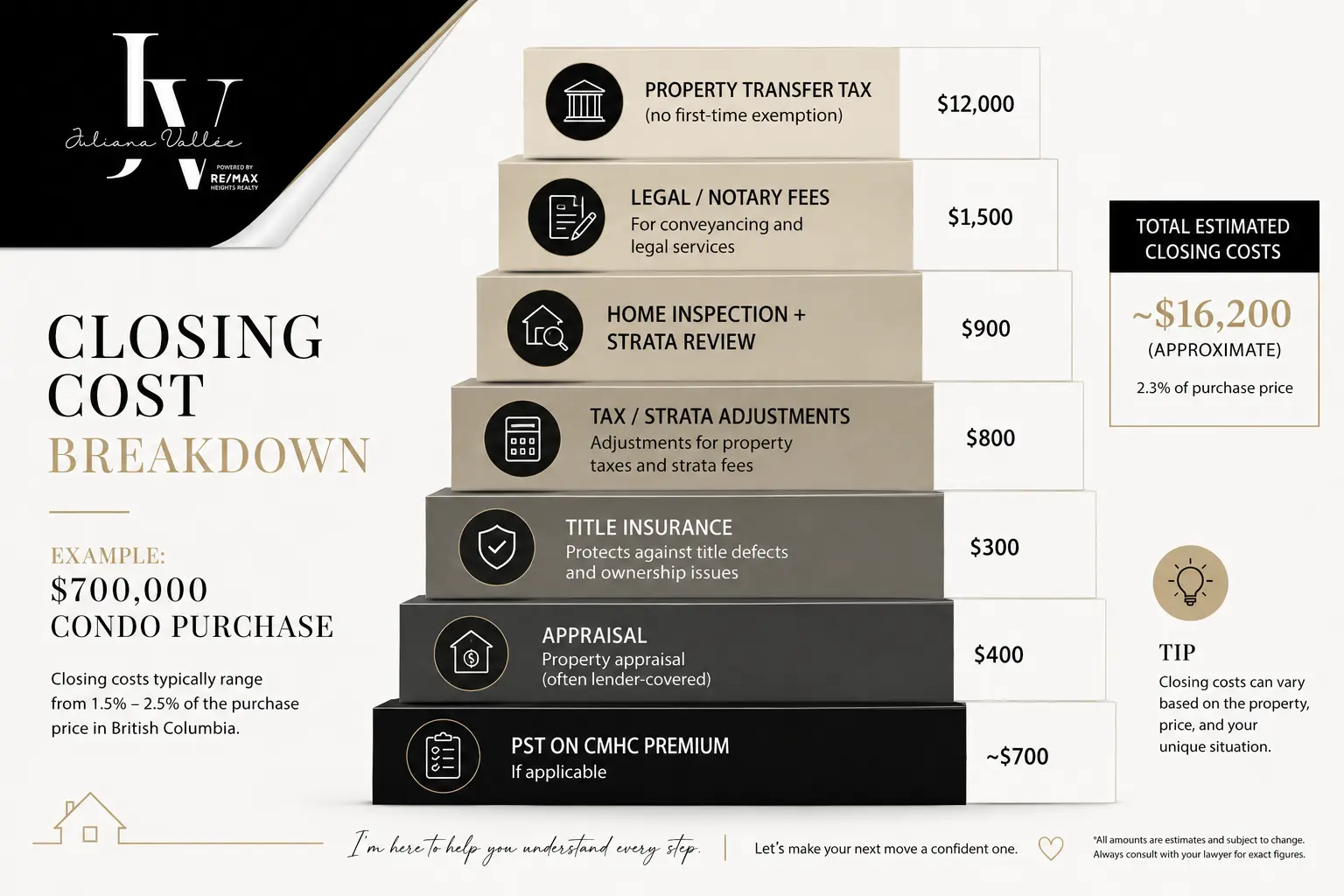
- Property Transfer Tax (no first-time exemption): $12,000
- Legal/notary fees: $1,500
- Home inspection + strata review: $900
- Tax/strata adjustments: $800
- Title insurance: $300
- Appraisal: $400 (often lender-covered)
- PST on CMHC premium (if applicable): ~$700
That's on top of your down payment. So a buyer with a $35,000 down payment on a $700,000 condo actually needs roughly $51,000 in cash to close — not $35,000.
How to Plan Around Closing Costs
- Build your cash plan with closing costs included. A common rule of thumb is 1.5%–4% of purchase price.
- Confirm first-time buyer eligibility early. If you qualify, the PTT exemption is the single biggest saving on closing day.
- Stack your savings vehicles. The First Home Savings Account (FHSA) and the Home Buyers' Plan (HBP) both can be used toward closing costs, not just the down payment.
- Get a written quote from your lawyer/notary up front so there are no surprises at the signing table.
Plan Once. Buy With Confidence.
Closing costs catch buyers off guard only when they aren't planned for. With a clear breakdown up front, you can budget accurately, qualify for the right amount, and walk into closing day confident — not stressed.
Ready to Talk Strategy?
Whether you're buying or selling in Burnaby, New Westminster, Coquitlam, or anywhere across Greater Vancouver, the market rewards preparation and good advice right now — not hesitation.
Juliana Vallée · RE/MAX Heights Realty · 778-822-8000
Start your home search →
Find out what your home is worth →
Disclaimer: This article is for general information only and is not intended as legal, financial, or tax advice. Every situation is different. Please speak with a qualified lawyer, mortgage professional, accountant, or financial advisor before making decisions related to separation, divorce, or real estate.
Categories
buying, home buying process, real estate education
Juliana Vallee
REALTOR® | REALTOR® Burnaby, New Westminster, Coquitlam & Vancouver | Juliana Vallée
or another way